
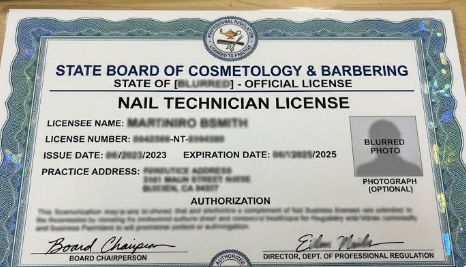
A nail tech license is an important requirement for people who want to work professionally as nail technicians in many parts of the United States. Whether you want to specialize in manicures, pedicures, acrylic nails, gel polish, or nail art, obtaining the appropriate license can help you build a successful career in the beauty industry. Understanding the licensing process, educational requirements, costs, and renewal rules can help you prepare for your future.
In this guide, you will learn what a nail technician license is, why it matters, how to obtain one, and what to expect during the process.
What Is a Nail Tech License?
A nail tech license is an official authorization issued by a state licensing board or another relevant regulatory authority. It allows qualified individuals to provide specific nail care services legally within the jurisdiction that issues the license.
Licensed nail technicians may perform services such as manicures, pedicures, nail extensions, artificial nail application, nail shaping, cuticle care, and decorative nail art, depending on local regulations.
Licensing requirements vary by state and country. In the United States, each state establishes its own rules regarding education, examinations, fees, and license renewal. Completing a nail technician course does not automatically mean you are licensed to practice professionally.
Why Is a Nail Technician License Important?
Obtaining a nail tech license can offer several advantages.
Legal compliance: In many states, a valid license is required before you can offer regulated nail services to the public.
Employment opportunities: Salons, spas, and beauty businesses may require applicants to hold an appropriate license.
Professional credibility: A license demonstrates that you have met the applicable training and examination requirements.
Improved technical knowledge: Professional training teaches nail anatomy, sanitation, infection prevention, product safety, and proper service techniques.
Business opportunities: If you plan to open a nail salon or operate independently, understanding licensing rules is an important first step. Additional business permits or establishment licenses may also be necessary.
Nail Tech License Requirements
The requirements for obtaining a nail tech license depend on the location where you intend to work. Common requirements in the United States include the following.
1. Meet the Minimum Age Requirement
Many states require applicants to be at least 16 or 17 years old, although the exact minimum age varies. Some jurisdictions may also require a high school nail tech license diploma, an equivalent qualification, or other educational documentation.
Check your state’s licensing board for the current eligibility rules.
2. Complete Approved Training
Applicants commonly need to complete a state-approved nail tech license program at a licensed beauty school or vocational institution.
Training typically covers:
- Manicures and pedicures
- Nail anatomy and common nail conditions
- Sanitation and infection control
- Artificial nails, gels, and acrylic systems
- Nail products and chemical safety
- Client consultation and professional practices
Required training hours vary significantly by state. Some jurisdictions require several hundred hours of instruction, while others have different educational pathways.
3. Pass the Required Examination
Depending on the state, applicants may need to pass a written examination, a practical examination, or another approved assessment. The written portion often tests sanitation, nail tech license safety, nail care procedures, and applicable regulations.
Practical testing requirements differ by jurisdiction, so confirm whether your state requires a hands-on examination.
4. Submit Your Application
After meeting the educational and examination requirements, you generally submit an application to the appropriate licensing authority.
Once the authority approves your application, you can follow its instructions for receiving your license.
How Much Does a Nail Tech License Cost?
The total cost depends on your location, school, examination requirements, and application fees.
Typical expenses may include:
- Nail technology education: Tuition can range from hundreds to several thousand dollars.
- Application fees: Licensing authorities charge fees that vary by state.
- Examination fees: These may be charged separately or included in another fee.
- Training supplies: Nail kits, tools, textbooks, and safety equipment may be additional expenses.
Before nail tech license enrolling, request a complete breakdown of tuition and additional costs. You should also verify that the school meets your state’s licensing requirements.
How Long Does It Take to Get a Nail Tech License?
The process can take several months, depending on the required training hours, your study schedule, examination availability, and application processing time.
Full-time students may nail tech license finish their training sooner than part-time students. To avoid delays, prepare your documents early and check the application deadlines.
Nail Tech License Renewal
A nail technician license may need to be renewed periodically.
Depending on local regulations, renewal nail tech license may involve paying a fee, completing continuing education, updating personal information, or meeting other requirements.
Keep track of your expiration date and review renewal instructions directly from your licensing authority. Working with an expired license may violate local regulations.
Can You Become a Nail Technician Without a License?
In many US states, professional nail services require an appropriate license. Other jurisdictions nail tech license may have different rules, exemptions, or registration systems.
Practicing without required authorization could lead to penalties or prevent you from working legally in a salon. Before accepting paying clients, verify the rules that apply to your circumstances.
If you live outside the United States, contact your local government or vocational training authority to determine whether nail technician licensing or another form of professional approval is required.
Tips for Choosing a Nail Technology School
Choosing the right training institution can make the licensing process easier.
First, verify that the school is approved by the relevant licensing authority. Compare tuition, training hours, practical experience, class schedules, and student support services. Ask whether nail tech license the course prepares students for the examinations required in your state.
You should also review the school’s sanitation standards and equipment. A quality program should provide opportunities to practice professional techniques while following appropriate hygiene and safety procedures.
Finally, research the local job market to understand what salons expect from newly qualified technicians.
FAQs
1. How do I get a nail tech license?
Generally, you must meet the eligibility requirements, complete approved nail technology training, pass any required examinations, and submit an application with the relevant fees. Exact steps vary by location.
2. How many hours of training are required for a nail technician license?
Training requirements differ by state. Some states require several hundred hours, while others establish different standards. Check your licensing board for the exact number.
3. Can I get a nail tech license online?
You may be able to complete some theoretical coursework online, but many licensing programs require in-person practical training. An online certificate alone may not qualify you for a professional license.
4. How much does a nail tech license cost?
Costs depend on tuition, supplies, examination fees, and licensing charges. Contact approved schools and your licensing authority for accurate estimates.
5. Is a nail technician license valid in every state?
No. A license issued in one state does not automatically authorize you to work in every other state. Some states offer endorsement or transfer procedures, but additional requirements may apply.
6. How often must I renew my nail technician license?
Renewal periods vary by jurisdiction. Check your license expiration date and the relevant authority’s renewal rules.
7. Can I open my own nail salon with a nail tech license?
A personal nail technician license may qualify you to perform certain services, but operating a salon can require separate business registration, establishment licensing, inspections, insurance, or other approvals.
Conclusion
A nail tech license can be an important step toward a professional career in nail care. It helps demonstrate that you have met the applicable training and licensing standards and may open doors to employment in salons, spas, and independent businesses.
Before starting your training, research your local requirements, choose an approved school, budget for the full process, and prepare for any required examinations. With appropriate training, attention to hygiene, and continued skill development, you can build a strong foundation for a career in the nail care industry.
3 thoughts on “Nail Tech License: Requirements, Costs, and How to Get Certified”