
A maintenance tech position is an important role in industries that depend on reliable equipment, safe facilities, and properly functioning machinery. Maintenance technicians help businesses prevent equipment failures, repair damaged components, and maintain buildings, electrical systems, and mechanical equipment. They work in manufacturing plants, hospitals, hotels, schools, warehouses, residential complexes, and commercial facilities.
For people interested in hands-on work and technical problem-solving, becoming a maintenance technician can provide a practical career path. Understanding the responsibilities, required qualifications, salary expectations, and advancement opportunities can help job seekers decide whether this profession matches their interests.
What Is a Maintenance Tech Position?
A maintenance tech, also known as a maintenance technician, is responsible for inspecting, maintaining, troubleshooting, and repairing equipment or facilities.
Some technicians focus on general building maintenance, while others specialize in electrical systems, industrial machinery, plumbing, heating, ventilation, and air conditioning (HVAC), or mechanical equipment.
The primary goal of a maintenance technician is to keep equipment and facilities operating safely and efficiently. Regular maintenance can reduce unexpected breakdowns, improve productivity, and extend the useful life of machinery.
Key Responsibilities of a Maintenance Technician
1. Inspecting Equipment and Facilities
Maintenance technicians regularly inspect machinery, tools, buildings, and other equipment to identify potential problems. They may check for unusual noises, leaks, worn components, loose connections, or signs of damage.
Early detection helps prevent small problems from becoming expensive repairs.
2. Performing Preventive Maintenance
Preventive maintenance involves servicing equipment before a major failure occurs. Typical tasks include lubricating moving parts, replacing filters, tightening components, cleaning machinery, and checking operating conditions.
Technicians follow maintenance schedules and manufacturer recommendations to keep equipment functioning properly.
3. Troubleshooting and Repairs
When equipment stops working, maintenance technicians investigate the cause and determine the appropriate repair. They may use diagnostic tools, technical manuals, testing instruments, and their practical experience to identify faults.
4. Maintaining Records
Accurate documentation is another important responsibility. Technicians may record completed repairs, inspection results, replacement parts, equipment conditions, and upcoming maintenance requirements.
These records help supervisors monitor equipment performance and plan future work.
5. Following Safety Procedures
Maintenance work can involve electricity, moving machinery, chemicals, heights, and other hazards. Technicians must follow workplace safety rules, use appropriate personal protective equipment, and apply required procedures such as lockout/tagout when servicing hazardous machinery.
They should never perform tasks beyond their training or authorization.
Qualifications Required for a Maintenance Tech Position
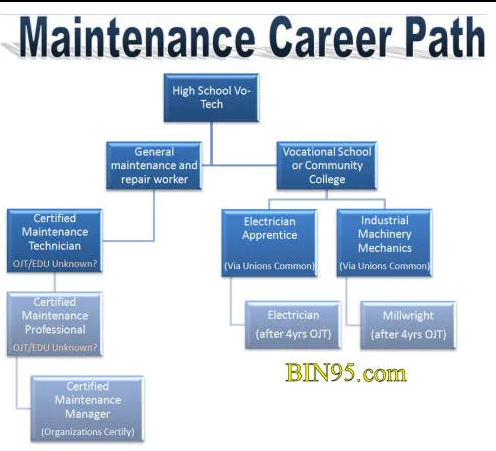
Educational requirements vary by employer and specialization. Some entry-level positions accept a high school diploma or equivalent, while technical or industrial roles may require vocational training, an associate degree, or relevant certifications.
Commonly preferred qualifications include:
- Basic knowledge of mechanical systems and tools.
- Understanding of electrical and plumbing fundamentals.
- Ability to read equipment manuals and technical diagrams.
- Familiarity with preventive maintenance procedures.
- Strong troubleshooting and problem-solving skills.
- Knowledge of workplace safety practices.
- Good communication and recordkeeping abilities.
Some employers provide on-the-job training for beginners. Others prefer candidates with previous experience in facilities maintenance, manufacturing, construction, or equipment repair.
Essential Skills for Maintenance Technicians
Technical knowledge is important, but successful technicians also need practical and interpersonal skills.
Problem-solving: Technicians must identify the cause of equipment failures and choose suitable repair methods.
Attention to detail: Careful inspections help reveal worn parts, leaks, and other problems that might otherwise be overlooked.
Time management: Maintenance teams often handle scheduled inspections alongside urgent repair requests.
Communication: Technicians need to explain problems, report completed work, and coordinate with supervisors or other specialists.
Physical capability: Some jobs require standing for long periods, lifting equipment, climbing ladders, or working in confined spaces.
Maintenance Tech Salary Expectations
Maintenance technician salaries depend on location, experience, industry, qualifications, and the complexity of the work.
In the United States, the US Bureau of Labor Statistics publishes wage information for different maintenance occupations, including general maintenance and repair workers and industrial machinery mechanics. These are separate occupational categories, so the figures should not be treated as interchangeable.
Entry-level general maintenance positions typically have different earning potential from specialized industrial maintenance roles requiring advanced electrical, mechanical, or automation skills.
Some employers also offer overtime, shift differentials, health benefits, retirement plans, or other compensation. Candidates should compare current local job listings and distinguish advertised base pay from total compensation.
How to Apply for a Maintenance Tech Position
Start by identifying positions that match your experience and technical skills. Search job boards and employer career pages using terms such as “maintenance technician,” “facilities maintenance technician,” “industrial maintenance technician,” and “maintenance helper.”
Prepare a résumé highlighting relevant training, tools you can use, practical projects, certifications, and previous work experience. If you are a beginner, emphasize transferable skills, safety awareness, willingness to learn, and any hands-on training.
Before attending an interview, review common troubleshooting scenarios and prepare examples of how you approach technical problems. Never claim qualifications or experience you do not have.
Career Advancement Opportunities
A maintenance technician can progress into senior technician, maintenance supervisor, facilities manager, or specialized technical positions.
Additional training in industrial automation, HVAC, electrical systems, programmable logic controllers (PLCs), or equipment diagnostics may improve career prospects. Advancement depends on experience, employer requirements, and relevant qualifications.
FAQs
1. What does a maintenance tech do?
A maintenance technician inspects equipment, performs preventive maintenance, repairs faults, documents work, and helps keep facilities operating safely.
2. Do I need a degree to become a maintenance technician?
Not always. Some entry-level jobs require only a high school qualification, while specialized positions may require vocational training, certifications, or a college degree.
3. Is maintenance technician a good career?
It can be a good option for people who enjoy practical problem-solving and technical work. Employment opportunities depend on local demand, industry, and qualifications.
4. What skills are most important for this job?
Troubleshooting, mechanical knowledge, safety awareness, attention to detail, communication, and time management are valuable skills.
5. Can beginners apply for maintenance tech positions?
Yes. Some employers hire entry-level candidates and provide training. Searching for maintenance helper, trainee technician, and entry-level maintenance roles may be useful.
6. What is the difference between a maintenance technician and an industrial maintenance mechanic?
A general maintenance technician may handle a wide range of building and equipment repairs. An industrial maintenance mechanic typically focuses more on machinery used in manufacturing and production environments.
7. Do maintenance technicians work night shifts?
Some do. Factories, hospitals, hotels, and other facilities may require evening, overnight, weekend, or on-call maintenance coverage.
Conclusion
A maintenance tech position offers opportunities for people who enjoy working with equipment, solving problems, and keeping facilities in good condition. The job combines inspections, preventive maintenance, troubleshooting, repairs, documentation, and workplace safety.
By developing practical skills, obtaining relevant training, and applying for suitable entry-level opportunities, candidates can build a foundation for long-term employment and career advancement in the maintenance field.
3 thoughts on “Maintenance Tech Position: Job Duties, Qualifications, Salary”