
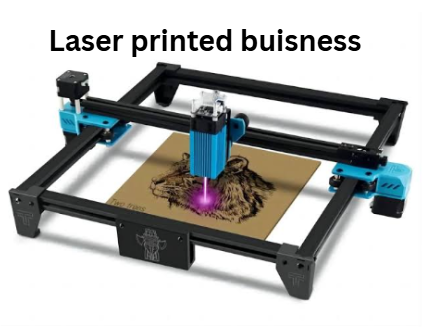
A laser printed business can be a practical way to provide customized and professional-looking printed products to individuals, organizations, and businesses. Laser printing technology is widely used for documents, labels, promotional materials, invitations, packaging, cards, and other products.
Depending on the equipment available and the target market, a laser printing business can operate from a small workspace or develop into a larger commercial printing operation. Understanding the equipment, products, customers, costs, and workflow can help entrepreneurs plan their business effectively.
What Is a Laser Printed Business?
A laser printed business is a business that uses laser printing equipment to produce documents or customized products for customers. Laser printers use toner and heat-based printing technology to transfer images or text onto suitable media.
Compared with traditional printing methods, laser printing can be convenient for short and medium print runs. It can also produce sharp text and consistent results.
A business can specialize in one type of printing or offer several services depending on its equipment and customer demand.
also read: Tech Boston Dorchester
Equipment Needed for a Laser Printing Business
The equipment required depends on the products and volume of work. A basic setup may include a reliable laser printer, computer, appropriate paper, toner, and basic finishing tools laser printed business.
Additional equipment can include:
- Paper cutter
- Laminator
- Binding machine
- Label sheets
- Cardstock
- Packaging materials
- Design software
- Storage shelves
- Cutting and finishing equipment
A business should choose equipment according to its expected workload rather than purchasing expensive machinery immediately.
Choosing the Right Laser Printer
The printer is one of the most important investments in a laser printing business. Consider factors such as print speed, maximum paper size, color capability, resolution, toner cost, connectivity, and supported media.
A monochrome printer may be sufficient for businesses focusing mainly on documents, while a color laser printer can provide additional opportunities for marketing materials and customized products.
Before purchasing equipment, laser printed business calculate the approximate cost per printed page. A printer with a lower purchase price may have higher ongoing toner or maintenance costs.
Starting a Laser Printing Business From Home
A small laser printing business can potentially be operated from home if local regulations and available space allow it. A home-based operation can reduce expenses associated with renting commercial premises.
A suitable workspace should laser printed business provide enough room for the printer, computer, paper, finished products, packaging materials, and other equipment.
Good organization is important because paper, toner, customer orders, and finished products can quickly accumulate as the business grows.
Finding Customers
Finding reliable customers is essential for a printing business. Potential customers can include students, teachers, offices, small businesses, event organizers, local shops, and individuals.
A business can promote its services laser printed business through social media, local community groups, business directories, word-of-mouth recommendations, and a simple website.
Offering clear examples of previous work can also help potential customers understand the quality and types of products available.
Pricing Laser Printing Services
Pricing should cover material costs, toner, electricity, equipment maintenance, labor, packaging, and other business expenses.
Instead of calculating prices only from the cost of paper and toner, consider the complete production cost.
Businesses can create different pricing structures for individual pages, bulk orders, customized products, and urgent orders. Offering discounts for larger laser printed business quantities may encourage customers to place bigger orders.
Benefits of a Laser Printing Business
Laser printing has several characteristics that can make it useful for a small printing operation. Laser printers generally produce sharp text and can handle repeated document printing efficiently.
A printing business can also offer a wide laser printed business range of products without necessarily specializing in large-volume commercial printing.
Another advantage is the possibility of combining printing with design, formatting, scanning, copying, binding, and other related services.
Challenges to Consider
Like any business, a laser printing business has potential challenges. Equipment can require a significant initial investment, while toner, paper, maintenance, and electricity create ongoing costs.
Competition can also be an issue, especially in areas where several printing shops already operate.
Customer demand may fluctuate depending laser printed business on the season. For example, printing demand can increase around school, university, business, or event-related periods.
Maintaining consistent quality and meeting promised deadlines can help a business build repeat customers.
How to Grow a Laser Printing Business
Once a printing business develops laser printed business a customer base, additional services can be introduced based on actual demand.
Possible expansion areas include:
- Graphic design
- Document scanning
- Photocopying
- Binding
- Laminating
- Business cards
- Custom labels
- Promotional materials
- Online ordering
- Delivery services
It is generally useful to test demand before making large equipment investments. Expanding gradually can help control costs while allowing the business to learn which services customers actually want.
Conclusion
A laser printed business can offer a variety of services, from everyday document printing to customized cards, labels, marketing materials, and business stationery. The required investment depends on the type and volume of products a business intends to produce.
Entrepreneurs should carefully evaluate equipment costs, materials, customer demand, pricing, competition, and operating expenses before starting. A small, well-organized operation can gradually expand by adding services that meet the needs of its target customers.
FAQs
- What is a laser printed business?
A laser printed business provides printing services using laser printers. It can produce documents, cards, labels, marketing materials, and other suitable printed products.
- Can I start a laser printing business from home?
Yes, a small printing operation may be possible from home if there is adequate workspace and local rules allow it.
- What equipment do I need for a laser printing business?
Basic equipment can include a laser printer, computer, paper, toner, and finishing tools. Additional equipment depends on the services offered.
- Is a color laser printer necessary?
Not always. A monochrome printer can be sufficient for document-focused services, while a color printer can support a wider range of products.
- What can I sell with a laser printing business?
Potential products include documents, business cards, invitations, labels, flyers, brochures, certificates, menus, and other customized printed materials.
- How do I price laser printing services?
Consider paper, toner, electricity, maintenance, labor, packaging, equipment costs, and other expenses when calculating your prices.
- Who are potential customers for a printing business?
Potential customers include students, offices, small businesses, teachers, event organizers, retailers, and individuals who need printed materials.
- Is laser printing profitable?
Profitability depends on factors such as equipment costs, operating expenses, pricing, customer demand, order volume, and competition.
- Can I offer design services with printing?
Yes. Combining graphic design with printing can allow customers to order both the design and finished printed product from one business.
- How can I grow a laser printing business?
You can expand by adding services such as binding, laminating, scanning, graphic design, custom labels, promotional materials, and online ordering based on customer demand.
2 thoughts on “Laser Printed Business: Ideas, Equipment, Costs”